
Why Professionals Choose Plastic & Resin Containers
High-quality thickened HDPE and resin planters are frost-resistant. Unlike ceramic or concrete, they do not absorb water, so they will not crack from freeze-thaw expansion, and can be placed outdoors year-round in most northern climates.
Thin-walled cheap plastic becomes brittle at low temperatures and may crack under impact or freeze stress, so it is not recommended for unprotected winter outdoor use in cold regions.
Food-grade virgin PP and virgin HDPE planters are completely safe for growing herbs, vegetables and fruit. They are BPA-free, chemically inert and will not leach harmful substances into soil — which is why they are widely used in agricultural seedling and urban vegetable growing.
Recycled plastic, low-grade PVC and unrated resin planters are not recommended for direct edible planting, as they may contain residual impurities.
Both materials are extremely low-maintenance. Routine cleaning only requires rinsing with water or wiping with a damp cloth; stubborn dirt can be cleaned with neutral detergent.
Avoid scratching the surface with sharp tools or steel wool. For outdoor long-term use, regular surface rinsing is sufficient, no special seasonal maintenance is required.
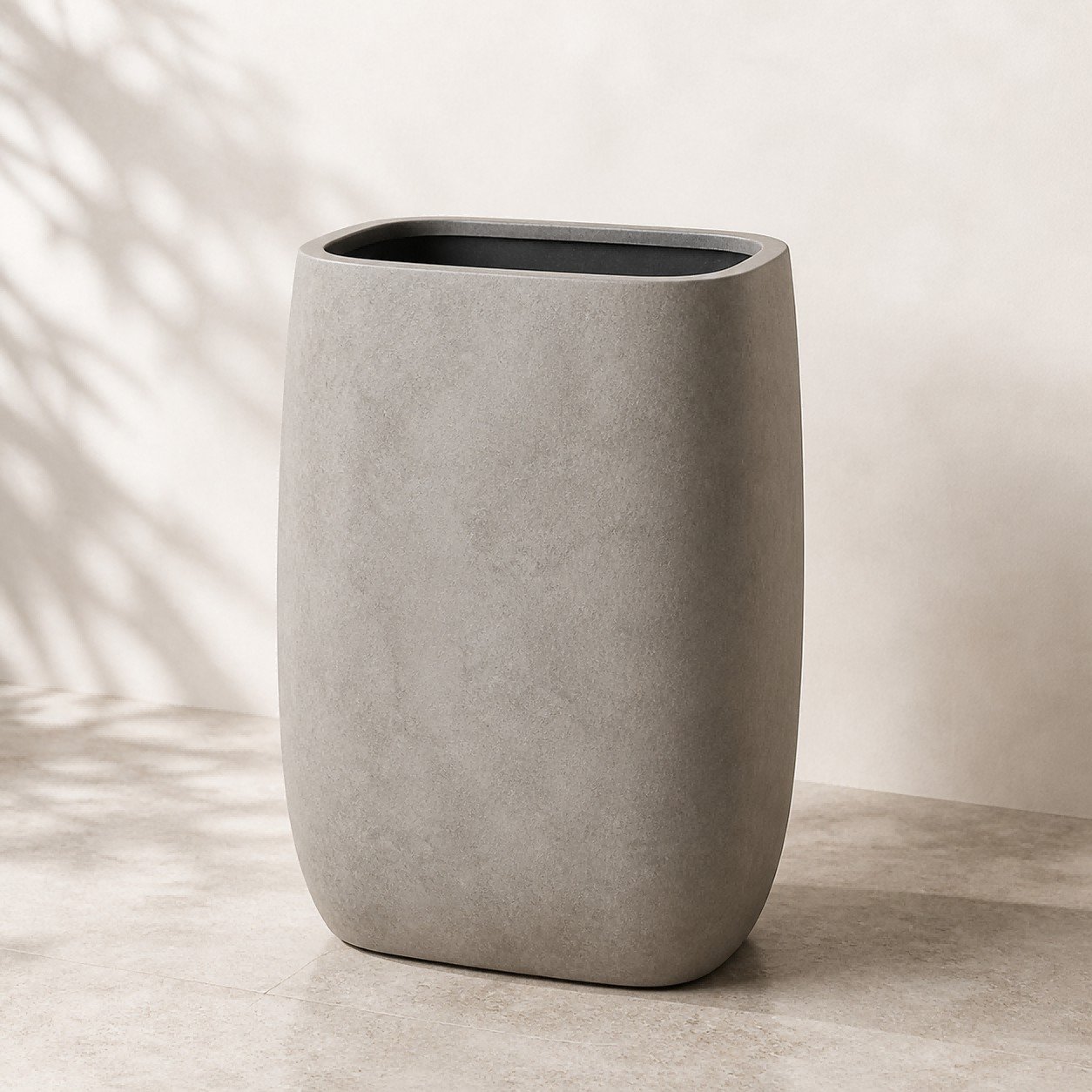
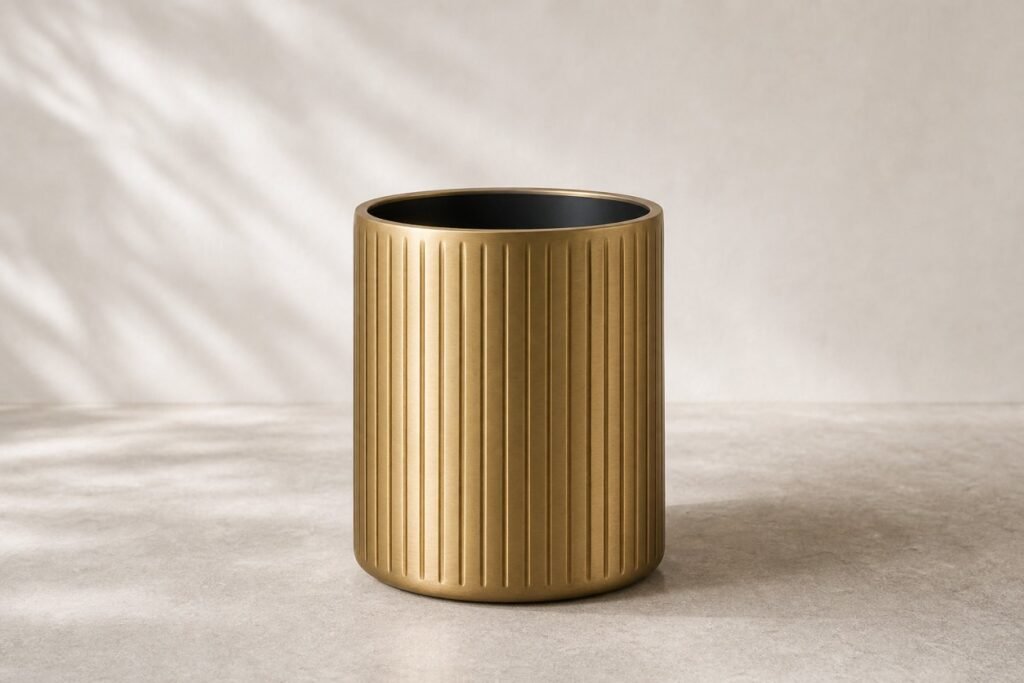
For large-volume commercial greening, property management and municipal projects, plastic and resin planters offer unbeatable cost performance. They are lightweight to lower logistics and installation costs, highly durable to reduce replacement rates, and support functional designs like self-watering to cut long-term maintenance labor. Meanwhile, high-end resin planters can also achieve stone-like and metal-like premium textures, balancing budget control and decorative effect.